



Zinc Oxide in EVA Foam: How Much Is Too Much?

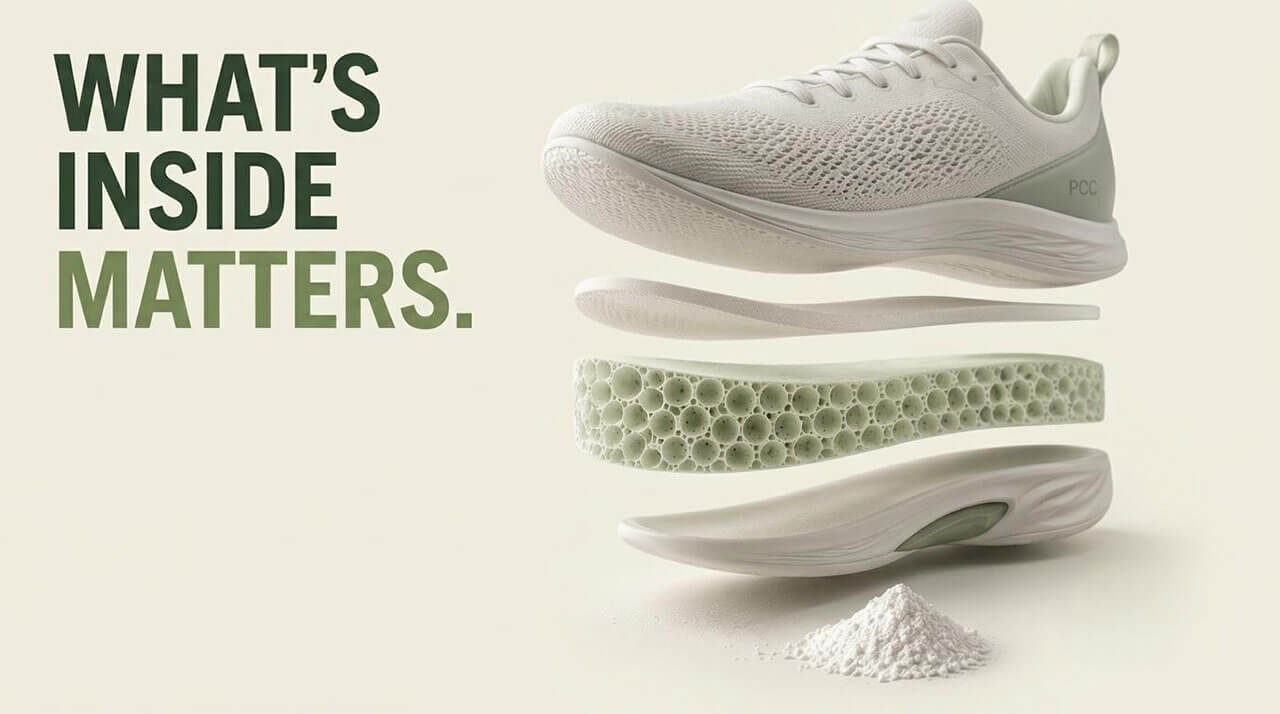
Zinc oxide is one of the most widely used activators in EVA foam production, and one of the easiest additives to get wrong. A formulation can pass every check on the datasheet and still shrink after demolding, sometimes right away, sometimes only after it has sat in storage for a few days. When that happens, the cause is rarely the blowing agent or the resin. More often, it traces back to how much zinc oxide is in the mix, and whether it is dispersed evenly enough to do its job.
The short answer is that the workable range is narrow and depends heavily on the crosslinking system. In azodicarbonamide (AC) systems without peroxide crosslinking, zinc oxide dosages are generally lower. In peroxide-crosslinked EVA foam, where zinc oxide takes on a second role in the crosslinking reaction, typical loadings run considerably higher. The reasoning behind that split, and what happens on either side of it, is worth understanding before adjusting a formulation.
Key Takeaways
- Zinc oxide lowers the decomposition temperature of azodicarbonamide (AC), the blowing agent most widely used in EVA foam, from roughly 220°C down to around 160 to 170°C, bringing gas generation into a workable processing range.
- Dosage is system-dependent: AC-only systems typically have lower dosages, while peroxide-crosslinked systems typically have higher dosages, since zinc oxide plays a dual role in those formulations.
- Too little zinc oxide produces slow, uneven foaming. Too much accelerates decomposition beyond what the crosslinking system can stabilize, causing shrinkage after demolding.
- Dispersion quality affects outcomes as much as dosage. Poorly dispersed zinc oxide creates localized decomposition hot spots, leading to uneven cell size or localized collapse.
- Zinc oxide is also used to partially or fully replace zinc stearate in some EVA formulations, simplifying the additive package while maintaining foaming control.
How Zinc Oxide Activates EVA Foaming
Chemical foaming works by generating gas inside a polymer at a controlled temperature, allowing that gas to nucleate into cells and expand into a stable cellular structure. In EVA formulations, the blowing agent, the crosslinking agent, and the foaming activator all need to act within the same narrow processing window. If gas evolves before the polymer has softened enough, or after crosslinking has already progressed too far, the result is an uneven or partially collapsed cell structure.
Azodicarbonamide decomposes at temperatures well above typical EVA processing conditions when used on its own, with a decomposition point around 220°C. Zinc oxide brings that decomposition down to roughly 160 to 170°C, a range most EVA extrusion and molding lines can reach without degrading the resin. This is the main reason zinc oxide has become close to a default activator choice in EVA foam, often used alongside or in place of zinc stearate. It also explains why the right amount is a moving target rather than a fixed number, which is where the crosslinking system starts to matter.
Zinc Oxide Dosage in EVA Foam: AC-Only vs. Peroxide-Crosslinked Systems
Zinc oxide dosage is not a variable that consistently improves results, and the effective range shifts depending on how the foam is crosslinked.
| Crosslinking System | Typical Zinc Oxide Loading | Why |
| AC blowing agent only, no peroxide crosslinking | Lower | Zinc oxide only needs to activate the blowing agent, not assist crosslinking. |
| Peroxide-crosslinked EVA (e.g., dicumyl peroxide) | Higher | Zinc oxide also interacts with the crosslinking chemistry, requiring a higher loading. |
Applying an AC-only dosage guideline to a peroxide-crosslinked formulation, or the reverse, is a common source of unexplained shrinkage or under-foaming. When a line is foaming too slowly, the more reliable fix is usually adjusting the ratio between blowing agent and activator, or reviewing the crosslinking system, rather than simply increasing zinc oxide loading.
Zinc Oxide Dispersion and EVA Foam Defects
Dosage is only half the picture. Zinc oxide performs consistently only if it disperses evenly through the compound. Poorly dispersed zinc oxide creates localized concentration points where decomposition accelerates ahead of the rest of the batch. Particle size and surface characteristics influence how predictably it disperses through the EVA matrix, which is why formulators troubleshooting inconsistent foam quality look at zinc oxide grade, not just zinc oxide content.
The table below maps common symptoms back to possible starting points. (*For reference only.)
| Symptom | Possible Cause | Where to Look First |
| Slow foaming, sparse or uneven cells | Zinc oxide loading below the effective threshold for the system | Blowing agent-to-activator ratio |
| Shrinkage after demolding, sometimes delayed | Zinc oxide loading above the effective threshold; decomposition outpacing crosslinking | Zinc oxide dosage vs. crosslinking rate |
| Localized collapse or uneven density in specific spots | Poor zinc oxide dispersion creates localized decomposition hot spots | Zinc oxide particle size and mixing process |
Zinc Oxide in EVA Footwear Midsole Foam
The most common industrial application of zinc oxide as a foaming activator is EVA midsole and outsole foam for athletic and casual footwear, where consistent cell structure directly affects cushioning, weight, and durability. On the outsole side, the same zinc compounds also serve as vulcanization activators in rubber, which is why zinc oxide sourcing decisions often span both the midsole and outsole formulations of the same shoe. In some EVA formulations, zinc oxide is used to partially or fully replace zinc stearate, since a single activator can simplify the additive package while maintaining comparable foaming performance.
Because footwear brands increasingly require documentation under frameworks such as ZDHC and REACH, the zinc oxide grade used in these formulations is not only a processing decision. It is also a compliance one, since the same additive that controls cell structure also has to meet restricted substance and hazard classification requirements set by brands and regulators.
Zinc Oxide vs. Zinc Stearate as an EVA Foaming Activator
Both additives function as foaming activators in EVA, and many formulations historically combined them. Zinc stearate additionally acts as an internal lubricant, improving flow and surface finish during processing. Zinc oxide alone can achieve comparable foaming activation in many formulations, and some producers have moved toward using it as the sole activator, citing simpler formulation control and more consistent results. The choice between the two, or a combination of both, generally comes down to the specific crosslinking system, processing equipment, and surface finish requirements of the final product.
Getting the Zinc Oxide Loading Right for Your Formulation
The ranges above are a starting point, not a substitute for testing against a specific blowing agent, crosslinking system, and processing line. Before scaling a new EVA foam formulation, it is worth running a small trial batch across two or three zinc oxide loadings within the relevant range, checking both immediate cell structure and shrinkage after a few days in storage, since some shrinkage only shows up after the material has fully cooled and relaxed.
Formulators working through this tradeoff on a live production line do not need to start from scratch. Pan-Continental Chemical's technical team regularly works through zinc oxide grade selection, dosage, and dispersion questions with EVA and rubber foam formulators, and can help narrow down a starting range faster than trial and error alone.
Frequently Asked Questions
Q: What is the ideal zinc oxide dosage for EVA foam?
A: There is no single number that applies across all formulations. In AC-based systems without peroxide crosslinking, typical loadings tend to be lower. In peroxide-crosslinked EVA systems, zinc oxide dosages tend to be higher. As a general pattern, too little slows foaming and produces uneven cells, while too much accelerates decomposition and increases the risk of shrinkage after demolding.
Q: Is zinc oxide or zinc stearate better as a foaming activator?
A: Both are established options. Zinc stearate offers additional lubrication benefits during processing, while zinc oxide alone can simplify the formulation while maintaining comparable foaming control. The better choice depends on the crosslinking system and the surface finish requirements of the final product.
Q: Why does too much zinc oxide cause shrinkage in EVA foam?
A: Excess zinc oxide speeds up decomposition of the blowing agent beyond what the crosslinking system can stabilize in time. The foam expands faster than the polymer network can lock the cell structure in place, so the material contracts as it cools, sometimes immediately and sometimes gradually over the following days.
Q: Does the grade of zinc oxide affect foam quality?
A: Yes. Particle size and dispersion behavior affect how evenly the activator distributes through the compound. Poor dispersion creates localized decomposition hot spots, which show up as uneven cell size, localized collapse, or shrinkage concentrated in specific areas of a batch rather than spread evenly.
Q: Can zinc oxide be replaced in EVA foam formulations for compliance reasons?
A: Some formulators explore alternative activators when hazard classification or restricted substance requirements are a concern. In practice, replacements often require re-balancing the entire blowing agent and crosslinking system rather than a direct substitution, since few alternatives lower the decomposition temperature of azodicarbonamide as predictably as zinc oxide does.

